Home accessibility is not just a matter intended for people with reduced mobility or permanent disabilities. More and more families understand that an accessible home is a more comfortable, safe home, prepared for all stages of life. From a temporary injury to natural aging, we may all need a more user-friendly and secure domestic environment at some point.
In this article, we will look at how to improve your home’s accessibility from a practical perspective. We will analyze three key areas: the removal of physical barriers, the adaptation of bathrooms and kitchens, and the incorporation of technological and comfort solutions. All of this with the goal of creating a more inclusive, functional, and future-proof home.
Removing architectural barriers
The first step in improving a home’s accessibility is to identify and remove the architectural barriers that hinder movement. These barriers often go unnoticed until someone has mobility issues, but once detected, their removal improves the experience for the entire family.
One of the most important points is uneven flooring. Steps at the entrance, height changes between rooms, or raised shower trays can pose a fall risk. Replacing them with gentle ramps, continuous flooring, or walk-in showers significantly improves safety and comfort.
Doors and hallways also play a key role. Narrow doors make it difficult for wheelchairs, walkers, or even baby strollers to pass through. Widening the doorway or installing sliding doors can be an effective solution without sacrificing useful space. In hallways, it is advisable to avoid unnecessary furniture and ensure good lighting to facilitate orientation.
Another essential aspect is the flooring. Non-slip pavements reduce the risk of slipping, especially in wet areas such as kitchens and bathrooms. Furthermore, avoiding loose rugs or exposed cables contributes to creating a safer and more accessible environment for everyone.
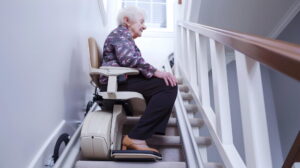
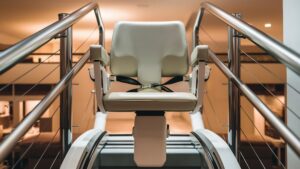
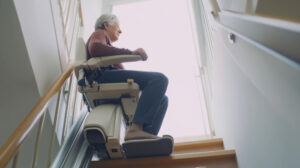
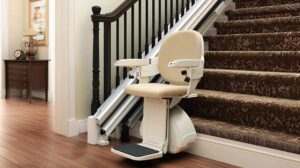
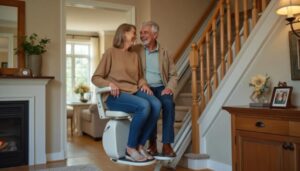
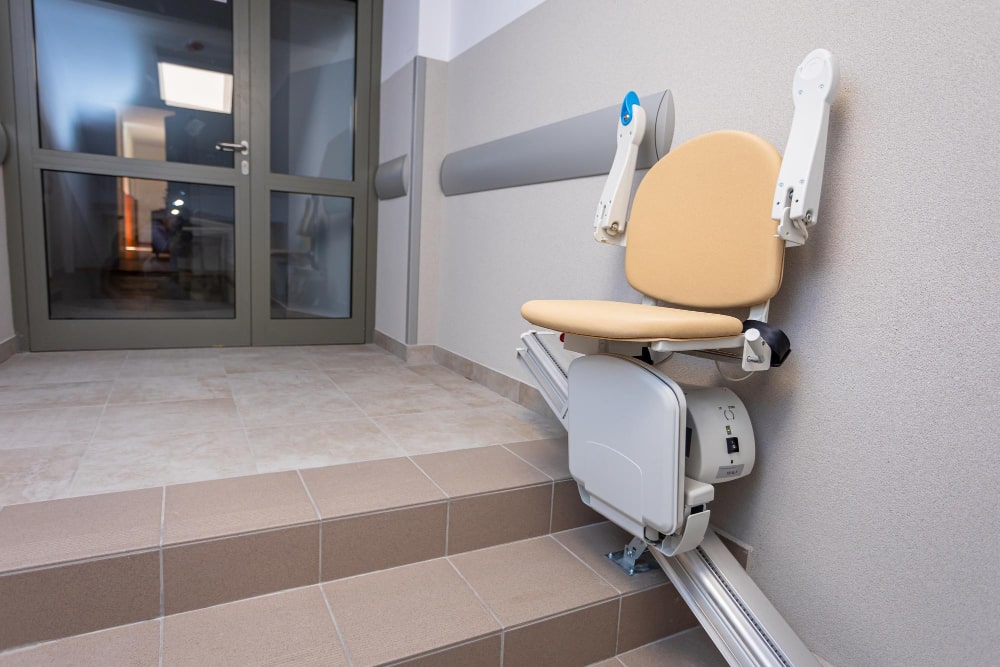
Electric stairlifts are one of the most effective solutions for improving accessibility in homes with stairs, especially in detached houses or duplexes. These types of systems allow users to go up and down stairs safely and comfortably, without the need for structural work. They operate via a rail fixed to the staircase and a motorized seat that moves smoothly, adapting to both straight and curved flights. In addition to restoring autonomy to people with reduced mobility, they also reduce the risk of falls and provide peace of mind for the whole family, as they are easy to use, safe, and increasingly well-integrated into home design.
Adapting bathrooms and kitchens
The bathroom and the kitchen are two of the rooms where the most domestic accidents occur and, at the same time, where a good adaptation has the greatest impact on personal autonomy. Improving their accessibility is a direct investment in well-being and safety.
In the bathroom, one of the most common actions is replacing the bathtub with a floor-level shower. This change facilitates entry and exit, reduces the risk of falls, and allows for the incorporation of shower seats or chairs if necessary. The installation of grab bars next to the toilet and in the shower area provides additional stability and increases user confidence.
The height of toilets and sinks also influences accessibility. There are elevated or adjustable models that make use easier for people who have difficulty bending down or standing up. Likewise, single-handle or sensor faucets are easier to use than traditional screw-type ones.
In the kitchen, the main objective is to facilitate access and handling. Countertops at different heights, cabinets with pull-out systems, and elevated appliances (such as ovens or dishwashers) reduce the need to bend or stretch. A good space distribution, with wide walkways, allows for freer and safer movement.
Technology and accessible comfort
Technology has become a great ally in improving home accessibility. Home automation and smart systems allow for the simple control of various elements of the dwelling, adapting to each person’s needs.
Smart lighting is one of the clearest examples. Turning lights on and off using motion sensors, remote controls, or voice assistants avoids unnecessary movement and reduces the risk of falls in dark areas. Furthermore, well-distributed lighting improves visibility and visual comfort.
Motorized blinds and curtains, as well as automatic doors, facilitate the daily use of the home for people with reduced mobility or strength limitations. These solutions provide not only accessibility but also comfort and energy efficiency.
Another important aspect is security. Alarm systems, smoke or gas detectors, and video doorbells allow for monitoring what happens in the home without the need to move constantly. Integrated into a centralized system, these elements create a safer and easier-to-manage environment.
Finally, accessible technology does not have to be complex or expensive. There are modular solutions that can be incorporated progressively, adapting to the changing needs of the home and those who inhabit it.